
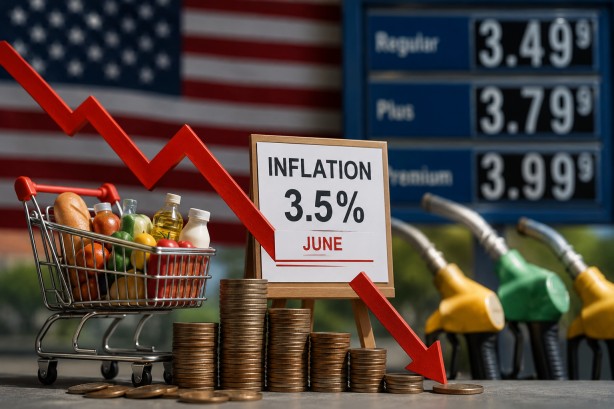
The United States experienced a slowdown in annual inflation, which eased to 3.5% in June, thanks to a temporary dip in energy prices that helped lower consumer costs. According to the latest data from the Consumer Price Index (CPI), this marked a decrease following higher inflation levels seen in preceding months. The monthly decline in prices, down 0.8% from May, was primarily driven by reductions in gasoline and fuel costs, which managed to counterbalance price hikes in areas such as food, housing, and utilities.
Core inflation, a measure that strips out the often volatile food and energy prices and is closely watched by the Federal Reserve, saw a slight decrease, registering at 2.6% on an annual basis. This moderation in inflation might, however, be fleeting. Global oil prices have started to climb again due to renewed tensions in the Middle East, a development that has already resulted in increased fuel prices for consumers and higher operational costs for industries like transportation and aviation.
Despite the recent moderation in inflation, the rate remains above the Federal Reserve’s long-term target of 2%. This situation leaves some uncertainty about when the central bank might decide to adjust interest rates in the future. The Federal Reserve plans to evaluate the latest inflation figures in conjunction with labor market conditions at its upcoming policy meeting later this month.
The temporary relief in inflation primarily owed to falling energy costs provides a complex backdrop for economic policymakers. While lower energy prices have offered consumers some respite, the potential for rising oil prices suggests that inflationary pressures could re-emerge, complicating the economic outlook and decision-making for the Federal Reserve as it seeks to balance economic growth with price stability.