
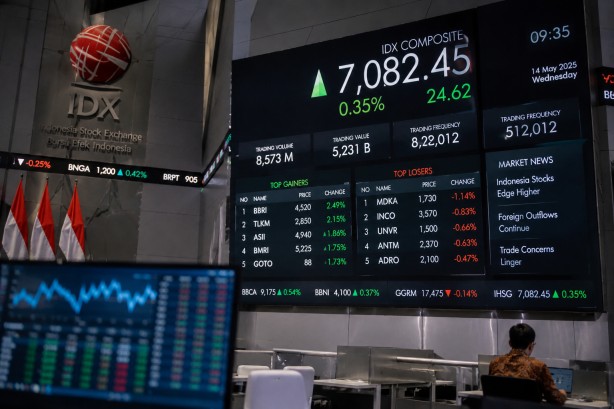
During the week ending July 24, Indonesia’s main stock market, the Jakarta Composite Index (JCI), experienced a modest rise of 0.34%, driven by increased trading activity. This growth occurred despite a persistent trend of foreign investors withdrawing funds and ongoing global economic instability. The Indonesia Stock Exchange saw its market capitalization climb to Rp 10,870 trillion, while the average daily trading volume spiked by 41%, reaching Rp 19.76 trillion. Nevertheless, foreign investors continued to sell off Indonesian assets, with cumulative outflows amounting to Rp 79.09 trillion this year, indicating a cautious approach to investing in the country.
The market’s mood was tempered by several external factors, notably the rise in global oil prices stirred by escalating tensions in the Middle East. Adding to the uncertainty were new tariffs imposed by the United States, targeting imports from several countries, including a 10% tariff on specific Indonesian goods. These developments have contributed to a more reserved investment climate, as stakeholders assess the potential impacts on Indonesia’s economic landscape.
Despite these challenges, Indonesia’s Finance Ministry has expressed confidence in the nation’s fiscal stability. While acknowledging that elevated oil prices might exert pressure on the 2026 state budget, officials maintain that the country’s overall fiscal health remains robust. This assurance seeks to mitigate concerns about Indonesia’s economic resilience in the face of volatile global markets and trade tensions.
With foreign investors remaining hesitant, the focus has shifted to domestic trading activity, which has shown significant growth. This increase in local investment is seen as a positive sign, suggesting that domestic investors are stepping in to support the market amid external uncertainties. However, the ongoing net selling by foreign investors underscores a broader cautious sentiment that has overshadowed the market’s performance.
As Indonesia navigates these economic challenges, the performance of the Jakarta Composite Index reflects a complex interplay of global and local factors. While the index’s rise signals resilience, the underlying caution among foreign investors and the implications of international trade dynamics continue to shape the outlook for the country’s financial markets.