
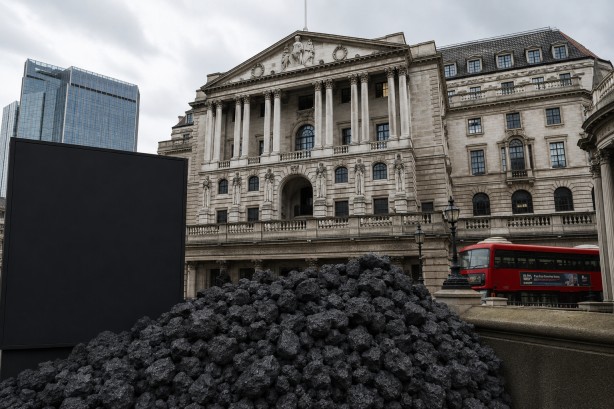
In a pivotal move to tackle climate-related financial risks, the Bank of England has declared that starting in October, it will exclude bonds tied to thermal coal companies from being used as collateral in its lending operations. This strategy reflects the central bank’s commitment to mitigating financial exposure linked to fossil fuels, particularly those used in electricity generation.
Commercial banks rely on bonds as collateral when borrowing from the central bank to maintain liquidity and facilitate transactions. With the new guidelines in place, bonds associated with thermal coal — a significant source of carbon emissions due to its usage in power plants — will be disqualified from this process.
The Bank of England has highlighted that companies engaged in thermal coal are increasingly vulnerable to financial instability as nations push forward with efforts to transition to cleaner energy sources and achieve net-zero emissions. Consequently, assets related to coal may depreciate, posing a risk to financial stability.
Additionally, the policy enables the central bank to impose discounts on bonds from other industries that are susceptible to climate risks, thereby safeguarding its financial interests against potential devaluation. Environmental advocates have praised this initiative, viewing it as a powerful message to financial markets that could prompt commercial banks to decrease their investments in high-pollution sectors. Already, over 150 major financial institutions globally have enacted limitations on dealings with the thermal coal industry.
Experts indicate that the policy’s impact will largely depend on the methodologies employed to assess climate risks and whether similar restrictions will be applied to other environmentally detrimental activities moving forward. This development is seen as a significant step in aligning financial operations with global sustainability goals.