
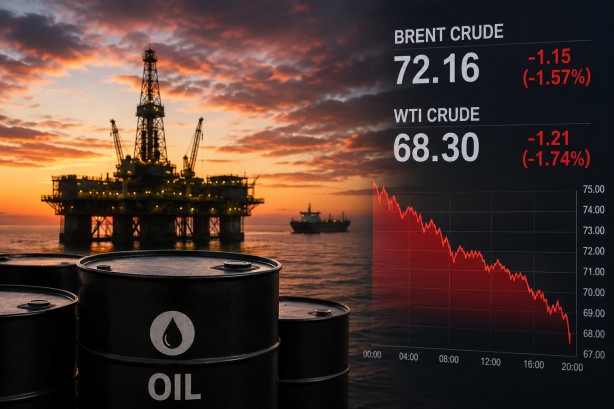
On Thursday, oil prices experienced a slight decrease as investors opted to secure profits amidst rising tensions between the United States and Iran. Brent crude saw a dip of 0.52%, settling at $84.51 per barrel, while US West Texas Intermediate crude recorded a 0.29% decline, reaching $79.37 per barrel. Despite these decreases, both benchmarks hovered near their highest levels in a month, following an initial continuation of recent gains.
The market’s focus has been largely influenced by concerns over potential disruptions in oil supply, sparked by a fresh series of US military strikes targeting Iranian sites. In response, Tehran has issued threats to curtail energy exports in the region, escalating fears among traders. A significant point of attention remains the Strait of Hormuz, a vital passage for global oil and liquefied natural gas shipments, where shipping activity reportedly slowed due to the latest tensions.
Geopolitical turmoil has continued to exert upward pressure on oil prices, although investors are vigilantly observing whether this conflict might prompt major interruptions in energy supplies. The strategic importance of the Strait of Hormuz is underscored by its role in facilitating a substantial portion of the world’s energy trade, making it a critical element in the current scenario.
Additionally, apprehensions regarding the security of the Bab el-Mandeb Strait, another crucial corridor for energy transportation, have surfaced. Speculation is mounting that regional allies could potentially become embroiled in the ongoing conflict, further exacerbating the situation.
Analysts have cautioned that if the situation deteriorates and export restrictions persist, oil prices could climb higher. Conversely, a resolution or easing of the crisis might lead to a decrease in prices as the year progresses, highlighting the volatility inherent in the current geopolitical landscape.